Quick answer: Looking for the best chess books for beginners? This guide lists 10 beginner‑friendly titles covering tactics, basic strategy, endgames and puzzle habits, so new players and parents can choose confidently. Each book is explained in simple language, with a clear tip on how to use it. EDUCHESS Academy encourages every student to read chess books alongside live coaching and online practice, because books build the thinking habits that make real improvement stick. Whether you are a complete beginner, a parent of a young learner, or an adult picking up chess for the first time, there is a book on this list for you.
Why Beginners Should Read Chess Books (Even in the Age of Apps)
Chess apps are wonderful. They are available at midnight, they gamify practice, and they never get impatient. But they have one limitation: they rarely explain the reason behind a move.
A good chess book is different. It talks to you, walks you through a position slowly, and explains what White is trying to do, what Black is worried about, and why a particular idea works. That kind of explanation is hard to get from a computer engine that simply shows a green arrow.
Here is why reading chess books still matters for beginners:
- Concepts stick better when explained. A book that explains why a rook belongs on an open file is more memorable than an app that only marks your move as a mistake.
- Books build independent thinking. When you study a chapter on tactics, you learn a pattern. The next time you see a similar position in a real game, your brain recognises it without a hint button.
- Books slow you down in a good way. Beginners often rush moves. Sitting with a book and a physical or digital board builds the habit of stopping, looking and thinking before moving.
- Books complement coaching. At EDUCHESS Academy, coaches often use ideas from classic books to explain concepts in class, creating a reinforcing loop between reading and live practice.
You do not need to close your favourite app and only read. The best approach is to use both, and this article will show you how.
How to Choose a Good Chess Book as a Beginner
Walk into any bookshop or search online and you will find hundreds of chess books. Many are excellent, but written for strong club players rather than true beginners.
Here is a simple checklist for choosing the right chess book as a beginner or as a parent shopping for a child:
- Check the target level. Most chess books state the intended level in the introduction or on the back cover. Look for phrases like “for beginners”, “0–1400 rated players”, “new to chess” or “no prior knowledge required”. If the first pages mention openings like the Sicilian Defence or Nimzo‑Indian without explaining them, the book is probably too advanced.
- Look for clear explanations, not just positions. Diagrams are useful, but diagrams paired with a sentence such as “White’s knight is strong here because it cannot be attacked by any pawn” are far more valuable.
- Prefer books with exercises or puzzles. Reading passively is useful; solving puzzles actively is even better. The best beginner books mix explanation with practice positions so you can test yourself as you go.
- Consider the format for kids vs. adults. Children (roughly age 5–12) learn better from books with larger diagrams, simple language, friendly illustrations and short chapters. Adults can handle denser text and longer explanations.
- Start with one book, not ten. One common mistake is buying a stack of chess books and finishing none of them. Pick one that fits your level and your interest, read it cover to cover, and only then move on.
Top 10 Chess Books for Beginners (With Simple Explanations)
The books below are genuinely useful for players rated roughly 0–1400. They are widely available and have helped many beginners improve. They are listed in a rough order of difficulty, starting with the absolute simplest and moving towards early‑intermediate level.
1. Chess for Children — Murry Chandler & Helen Milligan (Best for Complete Young Beginners)
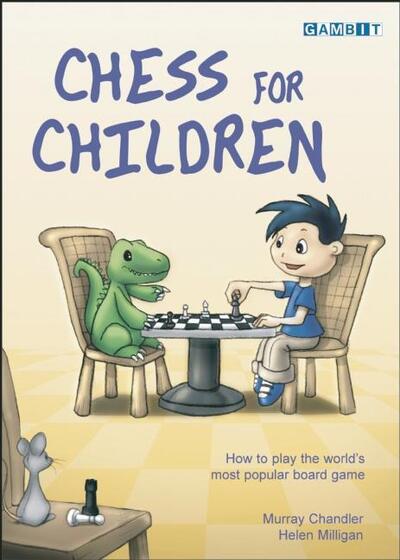
Who it is for: Children aged roughly 5–10 who are learning chess for the very first time. Parents who want to teach their child the basics at home will also find this book extremely accessible.
What it teaches: The book introduces every piece—how each one moves, how it captures and what it is worth—through short stories featuring a cat named Kassy and a chess‑playing kid. It covers the rules of chess, including special moves like castling and en passant, basic checkmate patterns and simple tactics. The language is deliberately simple and the diagrams are large and clearly labelled.
How to use it: Read one chapter together with your child each evening. After finishing the chapter, set up the positions on a real board and play them out.
2. Chess Fundamentals — José Raúl Capablanca (Best for Adults Who Want a Classic Foundation)
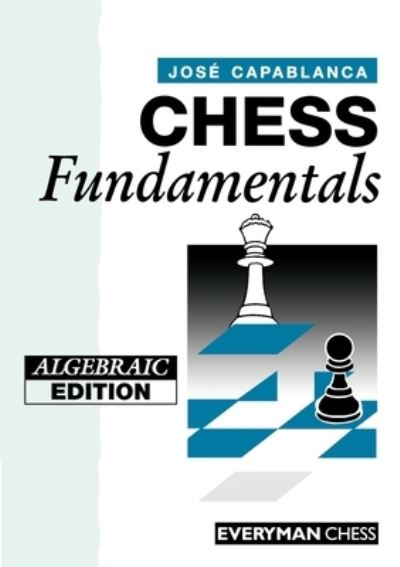
Who it is for: Adult beginners and older teenagers who want to learn chess from one of the greatest players in history. The writing is formal but clear, and no previous chess knowledge is assumed beyond knowing how the pieces move.
What it teaches: Capablanca’s classic explains simple and correct moves, the importance of pawns, basic endgame technique (such as king and rook versus king, and key pawn endings), and the principle of placing your pieces on active squares.
How to use it: Play through one annotated game or endgame example each evening on a real or digital board. Do not rush; let each concept settle before moving on.
3. Bobby Fischer Teaches Chess — Bobby Fischer, Stuart Margulies & Don Mosenfelder (Best Puzzle Book for Beginners)
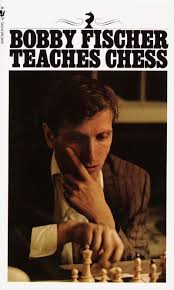
Who it is for: Beginners of any age—children and adults—who want to start building a tactical eye.
What it teaches: This book focuses on checkmate patterns and tactics (short combinations that win material or force checkmate). It uses a programmed learning format: you answer a puzzle, turn the page to check, and the difficulty slowly increases. Themes include back‑rank mates, discovered checks and smothered mates.
How to use it: Do 15–20 puzzles a day. Keep a notebook and write down any pattern you find difficult, then revisit those pages a week later and try again.
4. Winning Chess Tactics — Yasser Seirawan & Jeremy Silman (Best for Learning Tactical Patterns Clearly)
Who it is for: Beginners who have learned the rules and played a few games but want to understand how combinations work. It is particularly good for players aged 12 and above, and for adults.
What it teaches: Tactics are short sequences of moves—usually two to five moves—that win material or force checkmate. This book explains the major tactical themes: pins, forks, skewers, discovered attacks and combinations involving multiple themes, then gives practice positions for each.
How to use it: Study one tactical theme per week. Solve the exercises at the end of the chapter without looking at the answers first, even if you get some wrong.
5. Chess Tactics for Students — John Bain (Best Puzzle Workbook for Young Players)
Who it is for: Children aged roughly 8–14 who are already playing regularly and want to sharpen their tactical eye.
What it teaches: The book presents hundreds of tactical puzzles, all in the 1–2 move range, organised by theme such as forks, pins and discovered checks. Each puzzle is presented as a diagram with a simple question: “White to move and win”. There are no long explanations; the focus is on doing.
How to use it: Treat it like a daily exercise book. Solve 10 puzzles in the morning before school or practice. Circle puzzles you get wrong and revisit them weekly.
6. Logical Chess: Move by Move — Irving Chernev (Best Book for Understanding Why Moves Are Played)
Who it is for: Beginners and early‑intermediate players (roughly 800–1400) who have been playing for a few months and want to understand the reasoning behind chess decisions.
What it teaches: Chernev explains every single move in 33 complete games using plain English. You learn why a knight develops to f3 rather than e2, why Black delays castling and how grandmasters punish common mistakes, while picking up opening principles, middlegame plans and simple endgame technique.
How to use it: Play through one game per week on a board, moving the pieces yourself. After each move, try to guess the next move before reading the explanation.
7. How to Win at Chess: The Ultimate Guide for Beginners and Beyond — Levy Rozman (GothamChess) (Best Modern Book for Online‑First Learners)
Who it is for: Beginners of all ages who enjoy watching chess on YouTube or playing online and want a modern, friendly introduction that matches how chess is taught today.
What it teaches: Levy Rozman covers the rules, basic tactics, opening principles, simple attack patterns and practical thinking tips, including how to avoid common beginner mistakes like moving the same piece twice in the opening or ignoring the opponent’s threats.
How to use it: Read one chapter, then play five online games trying to apply exactly what you just read. Linking reading and playing this way speeds up improvement.
8. Chess: 5334 Problems, Combinations and Games — László Polgár (Best for Building a Deep Puzzle Habit)
Who it is for: Committed beginners and early‑intermediate players who are serious about improvement and want a comprehensive puzzle resource to use over many months.
What it teaches: This massive book contains over 5,000 chess puzzles, starting from extremely simple one‑move checkmates and gradually increasing in difficulty. The puzzles cover many tactical themes and build a deep library of patterns in your mind.
How to use it: Solve 10–15 puzzles per day in order. Do not skip ahead; the gradual increase in difficulty is part of the training method.
9. Silman's Complete Endgame Course — Jeremy Silman (Best Endgame Book for All Levels)
Who it is for: Beginners up to advanced players. The unique feature of this book is that it is organised by rating level, so you read only the endgames relevant to your current strength.
What it teaches: The beginner sections cover essential king and pawn endgames, basic rook endings and key ideas like opposition. Later sections go deeper for stronger players, all explained in clear, often humorous language.
How to use it: Read the beginner chapter first and play through every example on a board. Move to the next chapter only once you can solve the exercises without help.
10. The Steps Method (Workbooks 1 & 2) — Rob Brunia & Cor van Wijgerden (Best Structured System for Kids in a Chess Programme)
Who it is for: Children learning chess in a structured programme, particularly students in junior chess clubs, school chess or academies like EDUCHESS Academy.
What it teaches: Steps 1 and 2 cover all fundamental skills in a logical sequence: piece movement, simple checkmates, elementary tactics (forks, pins, discovered check), opening principles and basic pawn structures. The workbooks are full of exercises, with learning happening mainly by doing.
How to use it: Work through exercises with a parent or coach. Complete one page per session, check answers together and discuss mistakes before moving on.
How to Study These Books Step by Step
Buying a book is the easy part. Studying it consistently is where most beginners struggle. Here is a simple, realistic plan:
- Step 1: Choose one book, not five. Pick the book from the list that best matches your level and learning style. If you are a child in a chess programme, ask your coach. If you are an adult beginner, starting with Chess Fundamentals or Logical Chess: Move by Move is sensible.
- Step 2: Set up a board when you read. This is non‑negotiable. Playing through every position on a physical or digital board forces your brain to engage actively instead of passively scanning diagrams.
- Step 3: Study in short, regular sessions. Thirty minutes a day, four or five days a week, is better than one three‑hour session. Chess understanding builds through repetition and rest, not cramming.
- Step 4: Keep a chess notebook. Write down tactical patterns you learn, positions you find difficult and questions for your coach. Reviewing your notes before the next coaching session makes the lesson more productive.
- Step 5: Apply what you read in real games. After studying a chapter on forks, play several games looking specifically for forking opportunities. The gap between “knowing” a concept and using it in a real game closes only through practice.
- Step 6: Review puzzles you got wrong. Return to difficult exercises once a week. Getting a puzzle wrong is not failure; it is useful feedback.
How EDUCHESS Academy Uses Books With Students
At EDUCHESS Academy, books are not treated as optional extras; they are a core part of the training journey.
Students are encouraged to combine three pillars:
- Live coaching for personalised feedback and real‑time answers.
- Online practice to build speed, pattern recognition and game experience.
- Book study to build deep understanding that supports both coaching and practice.
Here is how EDUCHESS coaches bring books into training:
- Homework from books. Coaches may assign a specific chapter—for example, the chapter on pins from Winning Chess Tactics—as homework between sessions. Students solve the exercises at home and bring their answers and questions to the next class.
- Book examples discussed in class. When a student makes a common mistake in a game, the coach may show a classic game from a book like Logical Chess: Move by Move where a grandmaster exploited the same error.
- Helping parents choose the right book. A seven‑year‑old who has just learned the moves needs Chess for Children; a twelve‑year‑old rated around 900 might need Winning Chess Tactics or the Steps Method. EDUCHESS coaches guide parents so that material is always challenging but not overwhelming.
If you would like to know more about how book study fits into the coaching plan, visit the EDUCHESS Academy website to explore class options and get in touch with the team.
FAQ: Chess Books for Beginners
Should beginners read books or just use apps?
Use both. Apps are excellent for daily puzzles and playing games, but they rarely explain the reason behind moves. A good chess book fills that gap by walking you through ideas in plain language. Think of apps as your daily exercise and books as your classroom.
Which chess book is best for absolute beginners?
For young children (aged 5–10), Chess for Children by Murry Chandler is a gentle starting point. For adult absolute beginners, Chess Fundamentals by Capablanca or How to Win at Chess by Levy Rozman are both excellent choices.
How many chess books should a beginner read?
One at a time. Beginners often buy several books and finish none of them. Choose a single book that matches your level, complete it fully and then move to the next. Two or three well‑studied books will help more than many unfinished ones.
Are chess books still useful for kids in the age of YouTube and apps?
Yes. Chess books teach children to slow down and think systematically—a skill that screens often discourage. A well‑chosen book builds patience, reading comprehension and independent problem‑solving alongside chess skill.
At what rating should I move from beginner books to intermediate books?
A reasonable guideline is to move up once you can solve one‑ and two‑move tactics consistently, understand basic opening principles and handle simple king‑and‑pawn endgames. For many players, this corresponds to an online rapid rating of roughly 1000–1200.
Do I need a physical board to use these books?
A physical board is ideal because moving the pieces yourself helps your spatial memory. However, a digital board (such as a free board on Lichess or Chess.com) also works well. The key is to never study a chess book without some kind of board in front of you.
Can I use chess books alongside my EDUCHESS coaching sessions?
Yes. EDUCHESS Academy actively encourages this. Coaches can recommend specific books based on your level and current training focus, assign chapters as homework and discuss book examples in class.
Chess improvement is a long and rewarding journey. There are no shortcuts, but there is a good road. Consistent coaching, regular practice and thoughtful book study will take any beginner—child or adult—from confusion to confidence one game at a time.
